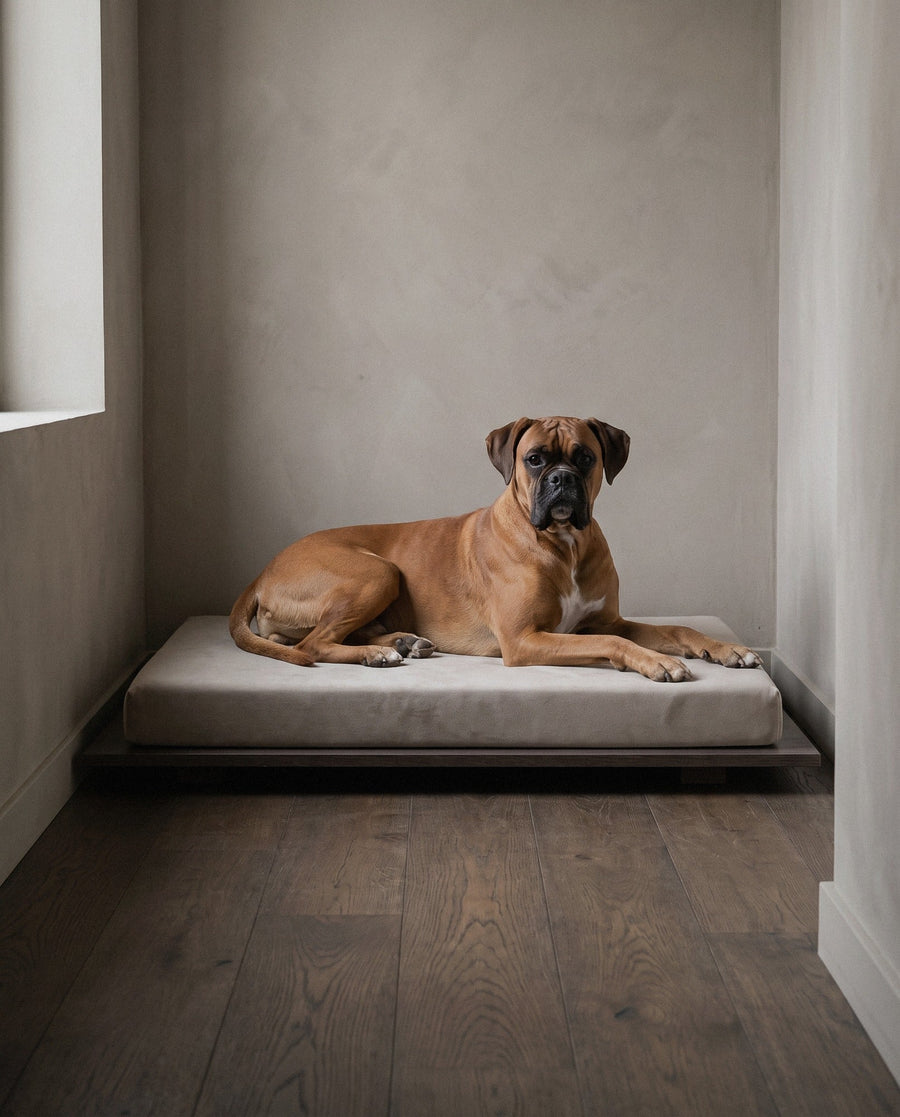
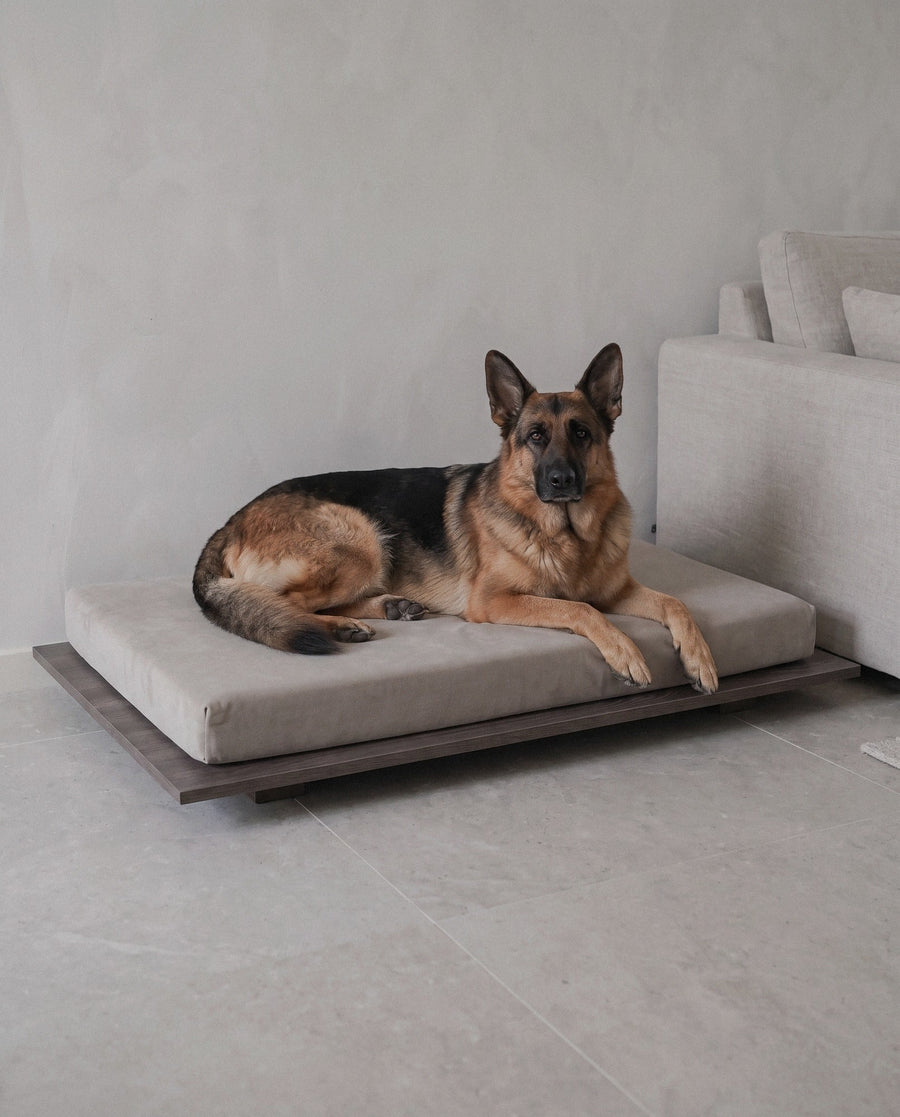
In short: cushion beds feel soft but compress unevenly under weight, while a flat orthopedic bed keeps a stable surface. For posture and joint support, choose a flat bed with high-density memory foam over a firmer support layer. Dogs that love to nest may still enjoy a bolster, but support comes from structure, not softness.
What feels comfortable at first touch does not always give your dog the support it needs over time. How a bed behaves under real use is what matters.
The problem with cushion-style beds
Cushion beds use plenty of filling to create a soft, raised surface. Under weight the filling compresses unevenly, creating dips that affect posture and pressure distribution.
The issue is not comfort but the lack of a flat, stable surface.
Why a flat surface changes everything
A flat orthopedic surface lets the body rest in a natural, aligned position without forced curves or pressure points. This matters most for dogs that rest many hours, senior dogs and dogs with joint sensitivity.
A flat surface supports the body. An uneven surface adapts without supporting.
Flat vs cushion at a glance
- Surface: flat and stable vs soft and uneven under weight.
- Support: consistent over time vs reduced as the filling compresses.
- Posture: natural, aligned position vs dips that can change posture.
- Best for: long rest, seniors and joint sensitivity vs dogs that like to nest and curl up.
Density and multi-layer construction
Kumo by Jeff&Co uses a multi-layer mattress. The top layer is high-density memory foam (40 kg/m³) that adapts to the body and relieves pressure. Beneath it, a firmer support layer keeps the bed from collapsing. Total thickness is 9 to 11 cm depending on size.
Comfort comes from the top layer. Support comes from what is underneath.
Discover KumoFrequently asked questions
Are flat dog beds better for older dogs?
A flat, stable surface is easier on joints and helps senior dogs rest in a natural position. Your vet can advise on specific conditions.
Do dogs like bolsters?
Some dogs like to lean or curl up against raised edges. If yours does, choose a bed whose main surface is still flat and firm underneath.
How thick should an orthopedic dog bed be?
Look for deep, stable support rather than a thin pad. Kumo’s mattress is 9 to 11 cm thick depending on size.